
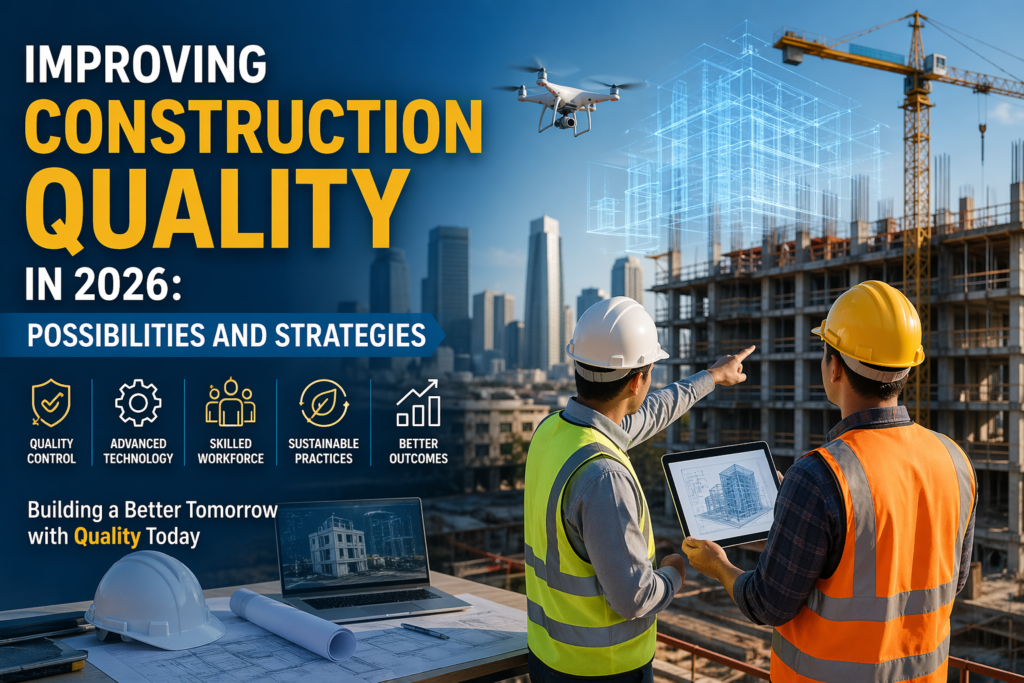
The construction industry is rapidly evolving, and in 2026, improving construction quality is no longer just a goal—it is a necessity. With increasing urbanization, stricter regulations, and rising client expectations, the demand for high-quality construction has reached new heights. Companies that fail to adapt risk losing competitiveness, while those that embrace innovation can achieve long-term success.
This article explores the key possibilities and practical strategies that can significantly enhance construction quality in 2026.
The Importance of Construction Quality in Modern Times
Construction quality directly impacts safety, durability, and overall project value. Poor quality can lead to structural failures, increased maintenance costs, and legal complications. In contrast, high-quality construction ensures longer building life, customer satisfaction, and better financial returns.
In 2026, quality is also closely linked to sustainability. Environmentally responsible construction practices are now expected, making quality not just about strength, but also efficiency and eco-friendliness.
Key Possibilities for Improving Construction Quality
1. Adoption of Advanced Technologies
Technology is transforming construction practices. Tools like Building Information Modeling (BIM), artificial intelligence, and drones allow better planning, monitoring, and execution of projects.
BIM, for example, enables teams to visualize projects before construction begins, reducing errors and rework. Drones help in site inspections, ensuring real-time quality checks. These innovations minimize human error and improve overall project accuracy.
2. Use of High-Performance Materials
The use of modern construction materials is another major opportunity. Materials such as self-healing concrete, high-strength steel, and eco-friendly composites enhance durability and reduce maintenance needs.
In 2026, material science continues to evolve, offering solutions that are both strong and sustainable. Choosing the right materials plays a crucial role in ensuring long-term quality.
3. Digital Project Management Systems
Digital tools streamline communication and coordination among project stakeholders. Cloud-based project management systems allow real-time updates, reducing misunderstandings and delays.
With better tracking of tasks and responsibilities, construction teams can maintain consistent quality standards throughout the project lifecycle.
Effective Strategies to Enhance Construction Quality
1. Skilled Workforce Development
One of the most important factors in construction quality is the skill level of workers. Investing in training programs ensures that workers are familiar with modern techniques and safety standards.
In 2026, continuous learning is essential. Companies should organize workshops, certification programs, and on-site training sessions to keep their workforce updated.
2. Strict Quality Control Procedures
Implementing strong quality control measures is critical. Regular inspections, testing, and audits help identify issues early.
A structured quality control system should include:
- Material testing before use
- Routine site inspections
- Documentation of all processes
- Immediate correction of defects
These practices ensure that problems are addressed before they escalate.
3. Improved Communication and Collaboration
Construction projects involve multiple stakeholders, including engineers, architects, contractors, and clients. Miscommunication can lead to costly mistakes.
Clear communication channels and collaborative platforms help ensure everyone is aligned. Regular meetings and transparent reporting systems contribute to better decision-making and quality outcomes.
4. Emphasis on Safety Standards
Safety and quality go hand in hand. Unsafe practices often lead to poor workmanship and accidents.
By enforcing strict safety regulations, companies can create a disciplined work environment where quality is prioritized. Providing proper safety equipment and training also boosts worker confidence and productivity.
5. Sustainable Construction Practices
Sustainability is a defining trend in 2026. Using energy-efficient designs, recycling materials, and reducing waste not only benefits the environment but also improves construction quality.
Green buildings are designed to last longer and perform better, making sustainability an integral part of quality improvement strategies.
Challenges in Achieving High Construction Quality
Despite the available opportunities, several challenges remain. Budget constraints, tight deadlines, and lack of skilled labor can hinder quality efforts. Additionally, resistance to adopting new technologies may slow progress.
To overcome these challenges, companies must adopt a proactive approach. Investing in innovation and long-term planning can help balance cost and quality effectively.
The Future of Construction Quality
Looking ahead, the future of construction quality lies in integration. Combining technology, skilled labor, and sustainable practices will define success in the industry.
Automation and robotics are expected to play a bigger role, reducing human error and increasing precision. Data-driven decision-making will further enhance project outcomes, ensuring consistent quality across all stages.
Conclusion
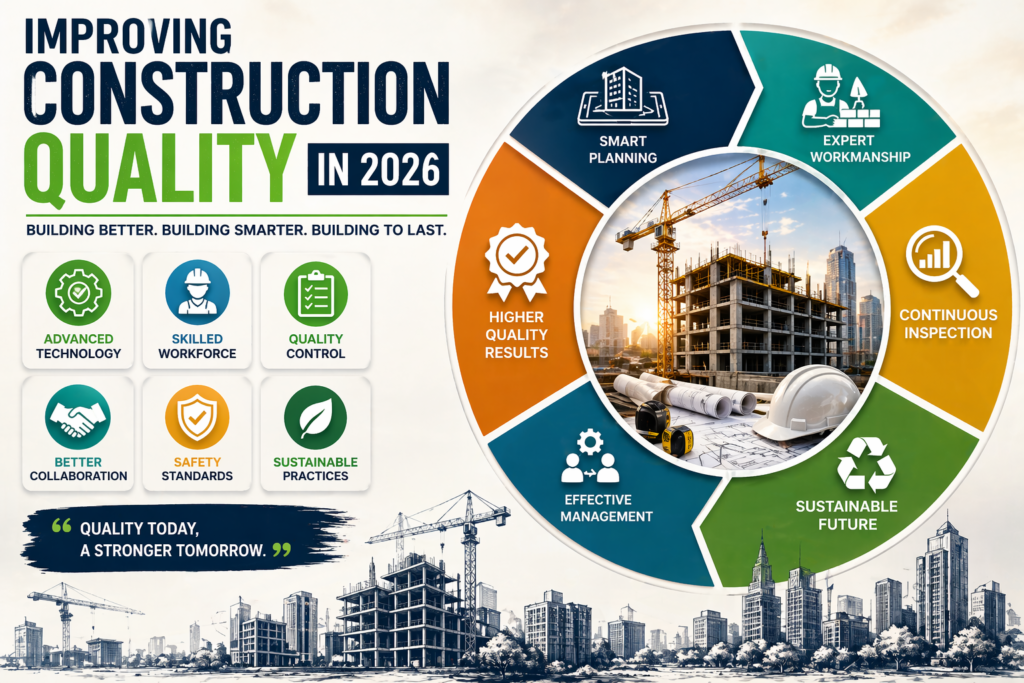
Improving construction quality in 2026 requires a comprehensive approach that combines innovation, skilled workforce, and strong management practices. By embracing advanced technologies, investing in training, and implementing strict quality control systems, the construction industry can achieve higher standards than ever before.
The possibilities are vast, but success depends on how effectively these strategies are implemented. Companies that prioritize quality today will not only meet current demands but also secure a stronger position in the future.