
Imagine sitting at a high-end Italian restaurant, waiting for a luxury pasta dish that smells of fresh garlic, vibrant lemon zest, and rich melted cheese. Now, imagine creating that exact same gourmet experience right in your home kitchen in under thirty minutes.
This creamy zucchini orzo recipe is the perfect blend of velvety comfort food and fresh, vibrant summer produce. If you are looking for a reliable mid-week family favorite or a reliable one-pan dinner, this dish is your ultimate solution.
While orzo looks like large grains of rice, it is actually a versatile short-cut pasta shape made from semolina flour. When cooked directly in broth and finished with heavy cream and fresh parmesan, it releases its natural starches to create a smooth, velvety sauce without needing a separate roux.
Let us dive deep into the essential ingredients, step-by-step methods, and the 7 life-changing secrets that will elevate your cooking from ordinary to absolutely spectacular.
Jump to RecipeComplete Ingredient Measurement Profile
To achieve the best results, using fresh and high-quality ingredients is vital. The table below outlines the exact quantities needed to serve a family of four.
| Ingredient Component | Exact Metric Quantity | US Imperial Standard | Ideal Substitute Option |
| Uncooked Orzo Pasta | 300 grams | 1.5 cups | Ditalini or Arborio Rice |
| Fresh Medium Zucchini | 2 pieces (grated) | 2 medium pieces | Yellow Summer Squash |
| Unsalted Butter | 30 grams | 2 tablespoons | Vegan Butter or Margarine |
| Extra Virgin Olive Oil | 15 milliliters | 1 tablespoon | Avocado Oil |
| Fresh Garlic Cloves | 4 pieces (minced) | 4 cloves | 1 tsp Garlic Powder |
| Low-Sodium Vegetable Broth | 720 milliliters | 3 cups | Chicken Broth / Bone Broth |
| Organic Heavy Cream | 120 milliliters | 0.5 cup | Full-Fat Coconut Milk |
| Fresh Organic Lemon | 1 piece (zested & juiced) | 1 whole lemon | Bottled Lemon Juice |
| Aged Parmesan Cheese | 50 grams (grated) | 0.5 cup | Pecorino Romano |
| Sea Salt & Black Pepper | To taste | To taste | Pink Himalayan Salt |
| Fresh Basil Leaves | 10 grams (chopped) | For garnish | Fresh Italian Parsley |
Detailed Step-by-Step Cooking Instructions
Step 1: Prep and Grate the Zucchini
Wash your zucchini thoroughly under cold running water. Cut off the stems. Use the coarse side of a box grater to shred the zucchini completely. Do not squeeze out the moisture, as this natural juice will help build the base flavor of the sauce.
Step 2: Saute the Aromatics
Place a large, deep skillet or a Dutch oven over medium heat. Add one tablespoon of olive oil and one tablespoon of unsalted butter. Once the butter melts and begins to bubble, add your finely minced garlic cloves. Cook for exactly one minute, stirring constantly to prevent the garlic from burning and turning bitter.
Step 3: Cook down the Zucchini Base
Add the grated zucchini directly into the aromatic garlic oil. Season with a generous pinch of sea salt and cracked black pepper. Saute the mixture for 3 to 4 minutes. The zucchini will soften, release its liquid, and turn into a beautiful bright green color.
Step 4: Toast the Orzo Pasta
Push the cooked zucchini to the outer edges of your skillet, creating an empty space in the center. Melt the remaining one tablespoon of butter in that space. Pour in the uncooked dry orzo pasta. Stir the orzo continuously for 2 minutes to toast it in the hot butter. You will know it is ready when the grains turn a light golden color and emit a rich, nutty aroma.
Step 5: The Simmering Process
Pour in the three cups of low-sodium vegetable broth and stir all the ingredients together thoroughly. Bring the liquid to a rolling boil over medium-high heat. Once boiling, immediately reduce the heat to low, cover the skillet with a tight-fitting lid, and let it simmer gently for 8 to 10 minutes. Make sure to remove the lid and stir every two minutes to prevent the orzo from sticking to the bottom of the pan.
Step 6: Create the Velvet Texture
When the orzo is perfectly tender and most of the broth has been beautifully absorbed, remove the skillet completely from the hot stove burner. Pour in the heavy cream, fresh lemon zest, and two tablespoons of fresh lemon juice. Stir rapidly to integrate the cream with the residual pasta starch.
Step 7: The Cheese and Herb Finish
Sprinkle the freshly grated aged parmesan cheese into the warm skillet. Stir continuously until the cheese melts completely into a uniform, glossy sauce. Garnish the top with chopped fresh basil leaves and a final crack of black pepper. Serve immediately while hot.
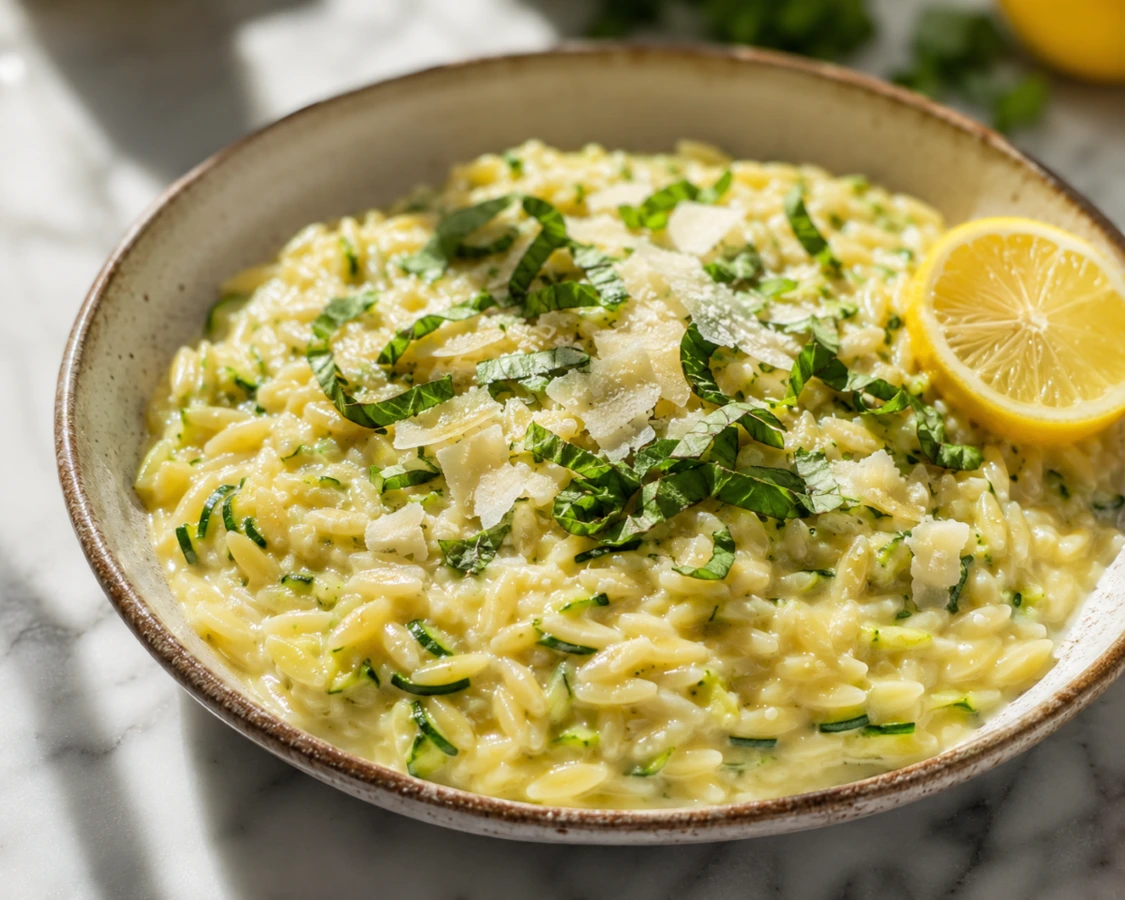
7 Life-Changing Secrets To Make The Absolute Best Creamy Zucchini Orzo
Ingredients
Equipment
Method
- Wash your zucchini thoroughly under cold running water. Cut off the stems. Use the coarse side of a box grater to shred the zucchini completely. Do not squeeze out the moisture, as this natural juice will help build the base flavor of the sauce.
- Place a large, deep skillet or a Dutch oven over medium heat. Add one tablespoon of olive oil and one tablespoon of unsalted butter. Once the butter melts and begins to bubble, add your finely minced garlic cloves. Cook for exactly one minute, stirring constantly to prevent the garlic from burning and turning bitter.
- Add the grated zucchini directly into the aromatic garlic oil. Season with a generous pinch of sea salt and cracked black pepper. Saute the mixture for 3 to 4 minutes. The zucchini will soften, release its liquid, and turn into a beautiful bright green color.
- Push the cooked zucchini to the outer edges of your skillet, creating an empty space in the center. Melt the remaining one tablespoon of butter in that space. Pour in the uncooked dry orzo pasta. Stir the orzo continuously for 2 minutes to toast it in the hot butter. You will know it is ready when the grains turn a light golden color and emit a rich, nutty aroma.
- Pour in the three cups of low-sodium vegetable broth and stir all the ingredients together thoroughly. Bring the liquid to a rolling boil over medium-high heat. Once boiling, immediately reduce the heat to low, cover the skillet with a tight-fitting lid, and let it simmer gently for 8 to 10 minutes. Make sure to remove the lid and stir every two minutes to prevent the orzo from sticking to the bottom of the pan.
- When the orzo is perfectly tender and most of the broth has been beautifully absorbed, remove the skillet completely from the hot stove burner. Pour in the heavy cream, fresh lemon zest, and two tablespoons of fresh lemon juice. Stir rapidly to integrate the cream with the residual pasta starch.
- Sprinkle the freshly grated aged parmesan cheese into the warm skillet. Stir continuously until the cheese melts completely into a uniform, glossy sauce. Garnish the top with chopped fresh basil leaves and a final crack of black pepper. Serve immediately while hot.
Notes
7 Life-Changing Secrets for the Best Creamy Zucchini Orzo
| Quick Secret Hack | What It Does For Your Dish |
|---|---|
| Secret 1: Toasting Dry Orzo | Creates nutty flavor & prevents mushy pasta |
| Secret 2: Coarse Grating | Allows zucchini to melt seamlessly into sauce |
| Secret 3: Warm Broth Addition | Maintains consistent pan temperature |
| Secret 4: Off-Heat Finishing | Prevents heavy cream from curdling |
| Secret 5: Block Parmesan Only | Ensures smooth melting without clumps |
| Secret 6: Zest Before Juicing | Maximizes bright citrus oil extraction |
| Secret 7: Save Extra Broth | Perfect for reheating leftovers perfectly |
1. The Art of Toasting the Dry Orzo
Never boil your orzo in a separate pot of water like regular pasta. Toasting the dry pasta grains in hot butter before adding any liquid is a crucial step. This process toasts the outer starch layer of the pasta, which locks in a deep nutty flavor profiles and prevents the small pasta shapes from expanding into a mushy texture during the simmering process.
2. Utilize Coarse Grating Techniques
Instead of chopping or slicing your zucchini into large rounds or cubes, always use a coarse box grater. Grating the vegetable allows it to break down smoothly during cooking. The tiny strands of zucchini practically melt into the cream sauce, ensuring every single spoonful of pasta has an even distribution of flavor without large, unappealing chunks of soggy vegetable.
3. Maintain Consistent Heat with Warm Broth
When pouring broth into your toasted orzo, avoid using cold liquid straight from the refrigerator. Adding ice-cold liquid shocks the pan, instantly drops the temperature, and disrupts the cooking process. Use room-temperature or slightly warmed broth to ensure the cooking cycle remains steady and predictable.
4. Implement Off-Heat Dairy Finishing
Because this recipe utilizes fresh lemon juice, adding heavy dairy products while the pan is over high heat can cause the sauce to separate or curdle. Removing your pan from the hot burner entirely before stirring in the cream and cheese guarantees a silky texture every single time.
5. Choose Block Parmesan Over Pre-Shredded
Pre-packaged, shredded cheese found in supermarkets is coated with cellulose powder and anti-caking agents to prevent clumping in the bag. Unfortunately, these additives also prevent the cheese from melting smoothly in sauces. Invest in a block of high-quality Parmigiano-Reggiano and grate it yourself right before cooking.
6. Always Zest Your Citrus First
Always remember to run your lemon across a microplane zester before cutting it open for juicing. Trying to zest a deflated, squeezed lemon half is difficult and dangerous for your fingers. The yellow zest contains essential aromatic oils that give the dish its signature premium finish.
7. Keep Extra Liquid on Standby
Orzo behaves similarly to risotto; it continues to absorb moisture even after you finish cooking and turn off the stove. If your pasta sits for ten to fifteen minutes before serving, it may thicken up significantly. Keep a half-cup of warm broth or warm water nearby to stir in and loosen the sauce back to its original state.
Comprehensive Nutritional Value Breakdown
Understanding the nutritional content helps with meal planning. The table below represents the values per single serving of this delicious meal.
| Nutrient Metric | Value Amount Per Serving | Daily Percentage Value (% DV) |
| Total Calories | 410 kcal | 21% |
| Total Carbohydrates | 46 grams | 15% |
| Dietary Fiber | 3.5 grams | 14% |
| Total Sugars | 4 grams | Neutral |
| Protein Content | 12 grams | 24% |
| Total Fat | 19 grams | 29% |
| Saturated Fat | 10 grams | 50% |
| Cholesterol | 45 milligrams | 15% |
| Sodium Content | 580 milligrams | 24% |
Custom Recipe Variations and Substitution Guide
- Protein Additions: This base recipe pairs beautifully with seared garlic shrimp, sliced grilled chicken breast, or baked salmon fillets placed right on top of the served pasta.
- Dairy-Free Adaptation: To make this entirely vegan, substitute the butter with quality olive oil, use full-fat canned coconut milk instead of heavy cream, and replace the parmesan with savory nutritional yeast.
- Vegetable Enhancements: Boost the nutritional profile by folding in fresh baby spinach leaves or halved cherry tomatoes during the last two minutes of simmering.
Storage and Reheating Guidelines
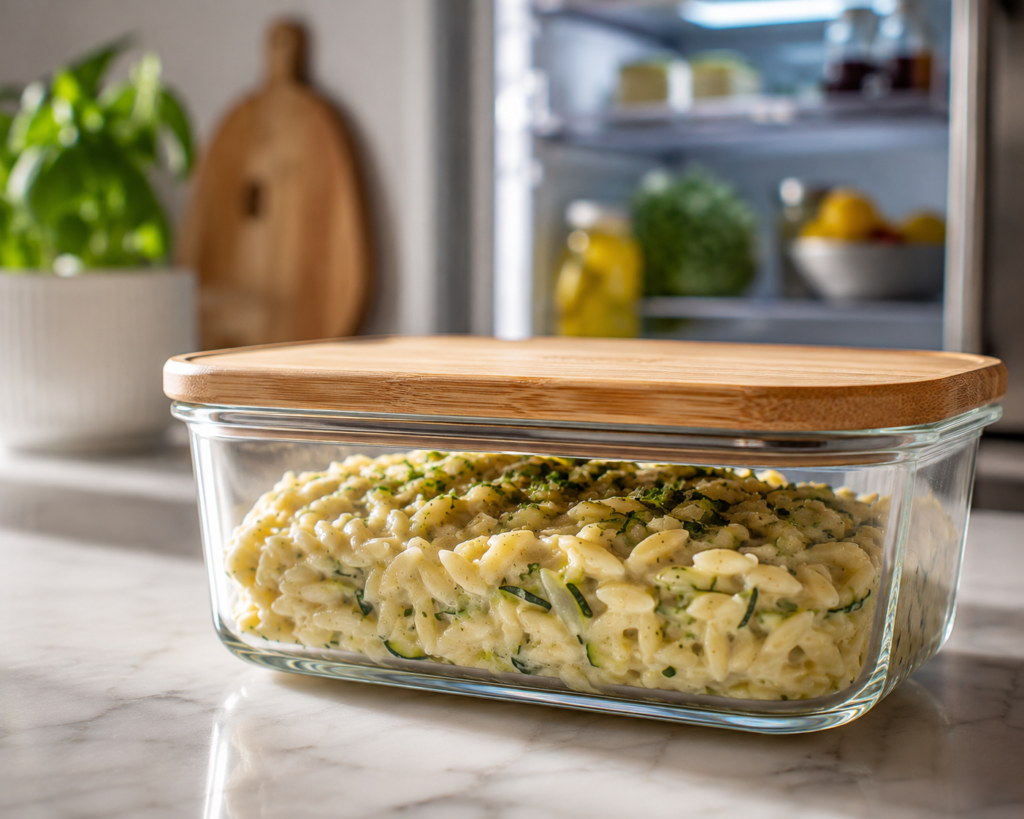
If you have leftovers, allow the orzo to cool completely to room temperature before transferring it into an airtight glass storage container. It will store safely in the refrigerator for up to three working days.
To reheat, place the orzo back into a small saucepan over low heat. Add two tablespoons of milk or vegetable broth to restore the creaminess, and stir gently for 5 minutes until heated through. Freezing this dish is not recommended, as the cream sauce will separate upon thawing.
Frequently Asked Questions (FAQ)
Can I use gluten-free pasta options?
Yes. You can find gluten-free orzo made from cassava flour, brown rice, or corn blends in specialty stores. Keep in mind that gluten-free variations release less starch, so your final sauce may require an extra splash of cream to reach optimal thickness.
What should I do if my sauce turns out too thin?
If your sauce appears too watery, remove the lid and let it simmer for an extra two minutes so the pasta can absorb the remaining moisture. Alternatively, stirring in an extra handful of finely grated parmesan cheese will instantly thicken the base.