
AI Fashion Trends 2026: What’s Next in Smart Clothing
The fashion industry is evolving faster than ever, and one of the biggest driving forces behind this transformation is artificial intelligence. From design to production and even personal styling, AI is reshaping how fashion works at every level. In this article, we will explore the most important AI fashion trends 2026 that are revolutionizing the industry and what they mean for designers, brands, and consumers.
Introduction to AI in Fashion
Artificial intelligence is no longer just a tech buzzword. It has become a practical tool used by fashion brands worldwide. The integration of AI helps companies analyze customer behavior, predict trends, and create designs that match consumer preferences.
The rise of AI fashion trends 2026 shows that technology is not replacing creativity but enhancing it. Designers now use AI tools to speed up their workflow and make smarter decisions.
1. AI-Powered Fashion Design
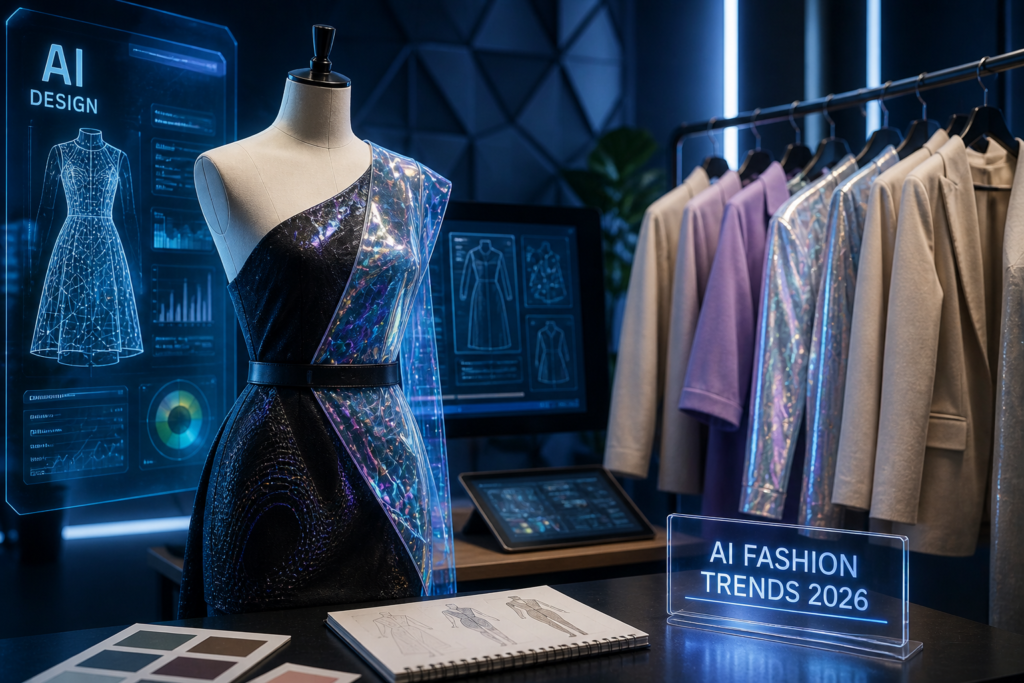
One of the most exciting developments in AI fashion trends 2026 is AI-driven design. AI tools can generate clothing designs based on data such as:
- Customer preferences
- Seasonal trends
- Social media insights
This allows designers to create collections that are more likely to succeed in the market.
AI design tools are especially helpful for beginners because they simplify complex processes and reduce the time required to create new designs.
2. Personalized Shopping Experience
Personalization is becoming a key part of the fashion industry. AI analyzes user data to recommend outfits that match individual tastes.
In AI fashion trends 2026, personalization goes beyond basic recommendations. AI can now:
- Suggest complete outfits
- Match accessories automatically
- Recommend styles based on body type
This improves customer satisfaction and increases sales for brands.
3. Virtual Fashion and Digital Clothing
Virtual fashion is another major highlight of AI fashion trends 2026. Digital clothing allows users to wear outfits in virtual environments such as social media and gaming platforms.
Benefits of virtual fashion include:
- No physical production cost
- Eco-friendly approach
- Unlimited creativity
Brands are now creating digital collections that exist only online, opening new revenue streams.
4. AI Styling Assistants
AI styling apps are becoming more advanced in 2026. These tools act like personal stylists, helping users choose outfits based on different occasions.
For example, AI can suggest what to wear for:
- Weddings
- Office meetings
- Casual outings
This trend is making fashion more accessible for everyone, even those who struggle with styling.
5. Sustainable Fashion with AI
Sustainability is a major concern in the fashion industry. AI helps reduce waste by optimizing production processes.
In AI fashion trends 2026, brands are using AI to:
- Predict demand accurately
- Reduce overproduction
- Use eco-friendly materials
This not only saves money but also protects the environment.
For more insights on sustainable technology, you can explore this detailed resource:
👉 https://www.mckinsey.com/industries/retail/our-insights/state-of-fashion
6. Smart Fabrics and Wearable Technology
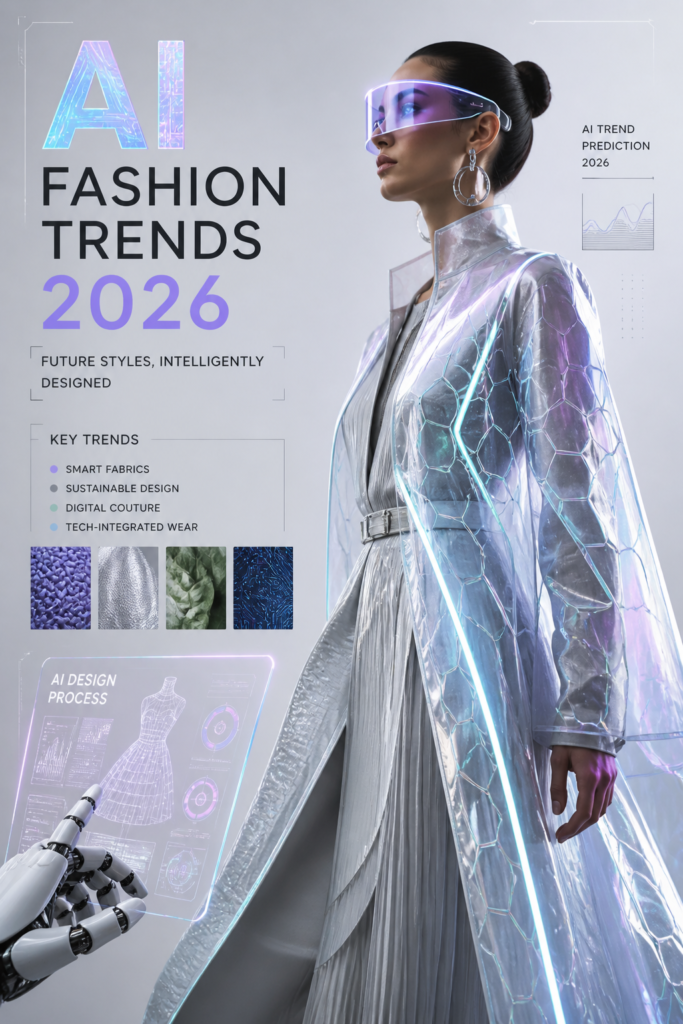
Smart clothing is becoming more popular as technology advances. AI is used to develop fabrics that can:
- Monitor health
- Adjust temperature
- Track physical activity
These innovations are shaping the future of fashion by combining style with functionality.
7. Trend Forecasting with AI
Predicting trends used to rely on human intuition, but now AI can analyze massive amounts of data to forecast trends accurately.
In AI fashion trends 2026, AI tools analyze:
- Social media trends
- Consumer behavior
- Global fashion data
This helps brands stay ahead of the competition and launch products at the right time.
8. AI in Fashion Marketing
Marketing strategies are also changing due to AI. Brands now use AI to create targeted campaigns that reach the right audience.
AI helps in:
- Content creation
- Customer segmentation
- Ad optimization
This makes marketing more efficient and increases conversion rates.
To learn more about AI applications, check this guide:
👉 https://www.ibm.com/topics/artificial-intelligence
9. Virtual Try-On Technology
Virtual try-on is one of the most practical applications of AI in fashion. Customers can try clothes online using augmented reality.
Benefits include:
- Better shopping experience
- Reduced return rates
- Increased confidence in purchases
This technology is becoming a standard feature in online fashion stores.
10. AI and Fast Fashion Evolution
Fast fashion is also evolving with AI. Brands are now able to produce clothing faster and more efficiently.
However, in AI fashion trends 2026, the focus is shifting from speed to sustainability. AI ensures that production meets demand without creating unnecessary waste.
Challenges of AI in Fashion
While AI offers many benefits, it also comes with challenges:
- High implementation cost
- Data privacy concerns
- Dependence on technology
Despite these challenges, the advantages of AI outweigh the drawbacks, making it a valuable tool for the future.
Future of AI Fashion Trends 2026
The future of fashion is closely linked with technology. As AI continues to evolve, we can expect even more innovative solutions.
Future possibilities include:
- Fully automated fashion design
- Hyper-personalized clothing
- AI-generated fashion shows
These advancements will continue to shape the industry in exciting ways.
Conclusion
The rise of AI fashion trends 2026 marks a new era in the fashion industry. From design to marketing and sustainability, AI is transforming every aspect of fashion.
Brands that adopt AI technology will have a competitive advantage, while consumers will enjoy better experiences and more personalized products.
As we move forward, the combination of creativity and technology will define the future of fashion. AI is not just a trend—it is the future.