
Daily Productivity Planner 2026: Complete Guide to Focus, Time Management, and Goal Achievement
A daily productivity planner is more than just a notebook or a digital template. It is a structured system designed to help individuals organize their time, prioritize tasks, and achieve long-term goals with clarity. In 2026, productivity tools have evolved significantly, blending psychology, technology, and behavioral science to help users maximize efficiency without burnout.
Whether you are a student, entrepreneur, freelancer, or working professional, using a structured planning system can significantly improve your daily output and mental clarity. This guide explains how a productivity planner works, why it matters, and how you can use it effectively in your daily life.
Understanding the Concept of a Daily Productivity Planner 2026
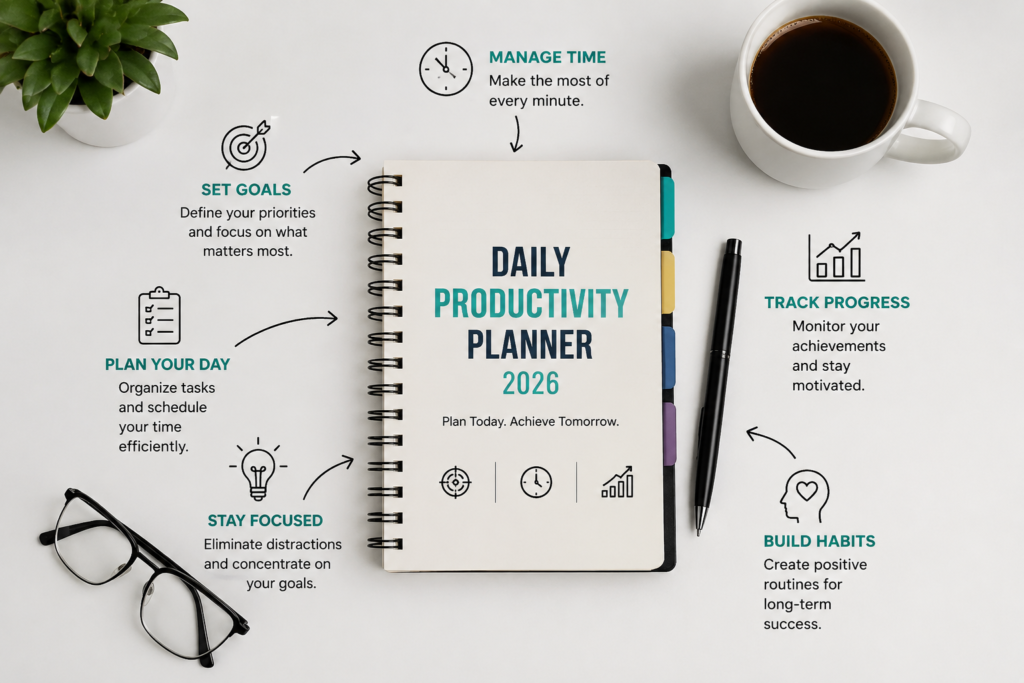
A modern productivity planner is not just about writing tasks. It integrates goal-setting frameworks, habit tracking, and time-blocking strategies. The idea is to transform chaotic schedules into structured, manageable systems.
A well-designed planner helps you:
- Define clear daily, weekly, and monthly goals
- Prioritize tasks based on importance and urgency
- Track habits and performance over time
- Reduce stress by eliminating mental overload
In 2026, planners are increasingly digital, allowing integration with apps and cloud-based systems. Many users now combine printable planners with digital tools for maximum flexibility.
You can explore structured digital systems like this concept here:
Daily Productivity Planner System Guide
Why Productivity Planning Matters More Than Ever
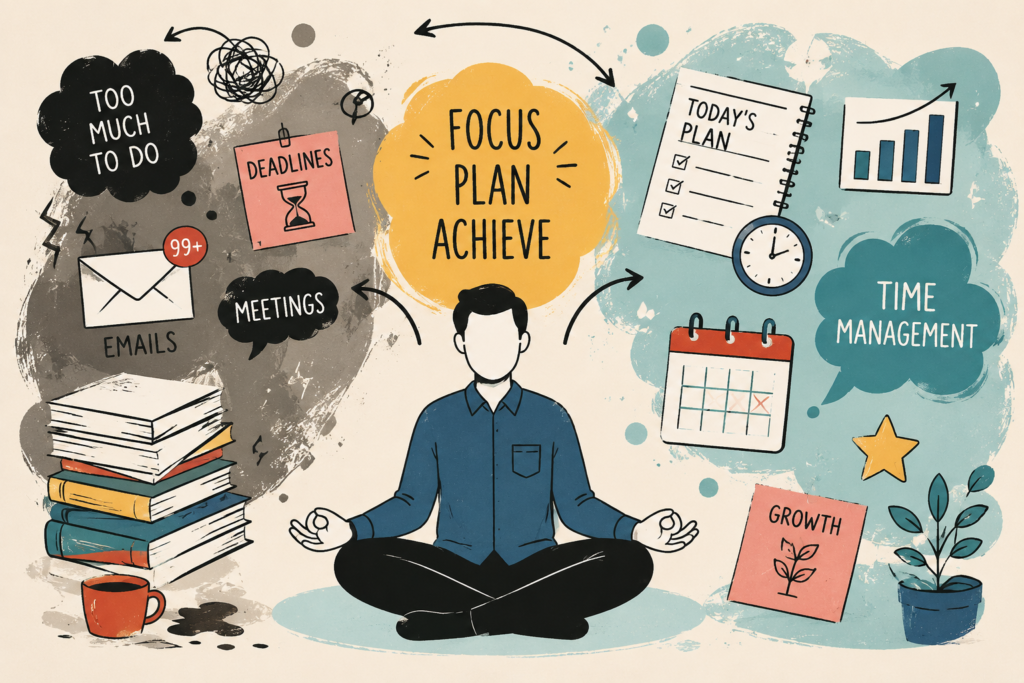
Modern life is filled with distractions. Social media, notifications, multitasking, and information overload make it harder than ever to stay focused. Without a proper system, people often end up busy but not productive.
A productivity planner solves this problem by introducing structure and discipline. It forces you to think before acting, which reduces wasted time and improves decision-making.
Key benefits include:
- Better time awareness
- Improved task completion rate
- Reduced procrastination
- Clearer long-term direction
- Improved mental focus
When used consistently, a planner becomes a personal accountability system.
Core Components of an Effective Productivity Planner
A high-quality planner typically includes the following sections:
1. Daily Task List
This is where you write down all important tasks for the day. It helps you stay focused and avoid forgetting priorities.
2. Time Blocking Section
Time blocking allows you to assign specific hours to tasks, ensuring better control over your schedule.
3. Goal Breakdown
Long-term goals are broken into smaller, actionable steps.
4. Habit Tracker
Helps you build consistency in daily routines like exercise, reading, or studying.
5. Reflection Section
At the end of the day, you evaluate what was achieved and what needs improvement.
A strong system like this can also be combined with digital tools for enhanced performance:
Productivity Planning Tools and Techniques
How to Use a Daily Productivity Planner Effectively
Simply owning a planner is not enough. The real value comes from consistent usage. Here is a step-by-step method:
Step 1: Plan the Night Before
Spend 5–10 minutes planning your next day. Identify top priorities.
Step 2: Use the 3-Task Rule
Focus on three major tasks that will have the biggest impact.
Step 3: Time Block Your Day
Assign time slots for each task instead of working randomly.
Step 4: Track Progress
Mark completed tasks to build motivation.
Step 5: Review Daily
Reflect on what worked and what didn’t.
This system builds discipline over time and gradually improves productivity habits.
Common Mistakes People Make
Even with a planner, many users fail to see results due to common mistakes:
- Overloading the task list
- Ignoring time blocking
- Not reviewing daily progress
- Using the planner inconsistently
- Focusing on minor tasks instead of priorities
Avoiding these mistakes can significantly increase your efficiency.
Digital vs Printable Productivity Planners
There are two main types of planners:
Digital Planners
These are used on apps, tablets, or computers. They are flexible and often include reminders and integrations.
Printable Planners
These are physical sheets or PDFs that you can print and fill manually. Many people prefer them for focus and simplicity.
Both options are effective; the choice depends on personal preference.
Psychology Behind Productivity Planning
Productivity planning is deeply connected to behavioral psychology. When you write tasks down, your brain treats them as commitments rather than thoughts. This reduces mental load and improves focus.
Additionally, tracking progress triggers dopamine release, which increases motivation and consistency. Over time, this creates a positive productivity loop.
Who Should Use a Productivity Planner?
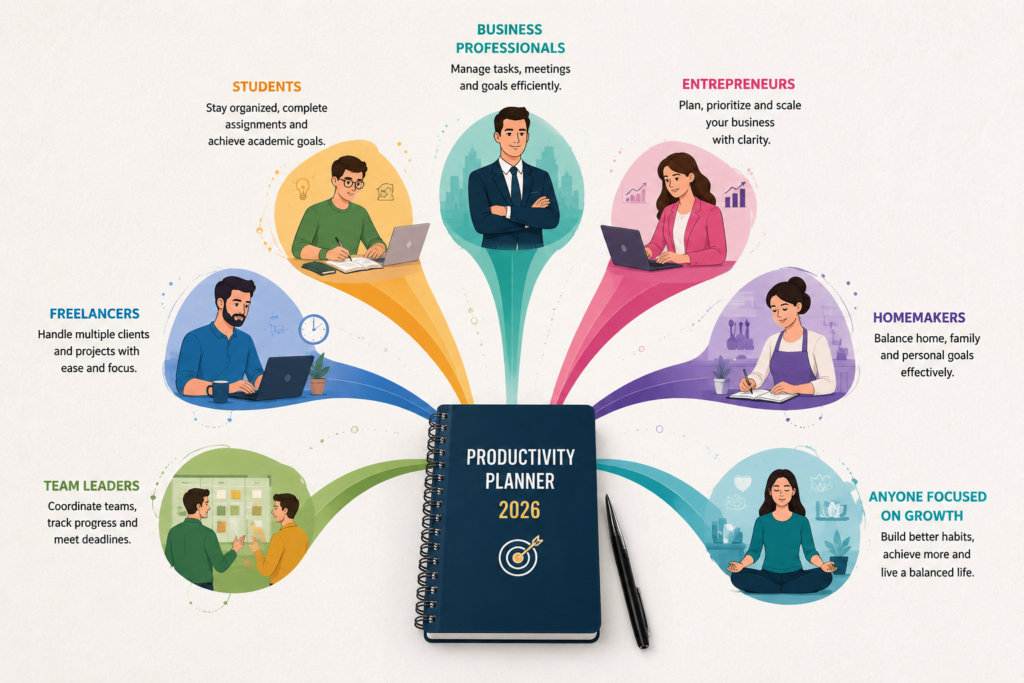
A productivity planner is suitable for:
- Students managing study schedules
- Entrepreneurs handling multiple projects
- Freelancers tracking deadlines
- Office workers improving efficiency
- Anyone struggling with time management
If you feel overwhelmed or disorganized, a planner can be a game changer.
Future of Productivity Planning in 2026
In 2026, productivity planning is becoming more intelligent. AI-based planners can now suggest schedules, analyze productivity patterns, and even automate task prioritization.
Hybrid systems combining digital AI tools and traditional planning methods are becoming the most effective approach.
FAQs
1. What is a daily productivity planner used for?
It is used to organize tasks, manage time, and achieve personal or professional goals efficiently.
2. Is a digital planner better than a paper planner?
Both are effective. Digital planners offer flexibility, while paper planners improve focus and reduce distractions.
3. How long should I use a planner to see results?
Most people notice improvements within 2–3 weeks of consistent use.
4. Can a planner really increase productivity?
Yes, because it improves focus, reduces procrastination, and provides clear direction.
5. What is the best time to plan my day?
The best time is usually the night before or early morning.
Conclusion
A daily productivity planner is one of the simplest yet most powerful tools for improving time management and achieving goals. In a fast-paced world filled with distractions, having a structured system helps you stay focused, organized, and consistent.
The key is not just using a planner but using it correctly and consistently. When combined with discipline and reflection, it becomes a long-term system for personal and professional growth.
If you apply the techniques discussed in this guide, you will gradually notice improved focus, reduced stress, and better control over your daily life.